
March 10, 2023
Gene Editing: Have We Gone Too Far?
Garrett Burnett

What is Gene Editing?
Your DNA is read like a recipe. However, this complex, lengthy recipe does not read like a Paul Hollywood technical challenge recipe from the Great British Bake Off. It is incredibly precise and detailed. There is no room for guessing or improvising, yet, much like the experiences of the bakers on the show, the product does not always come out of the oven perfectly.
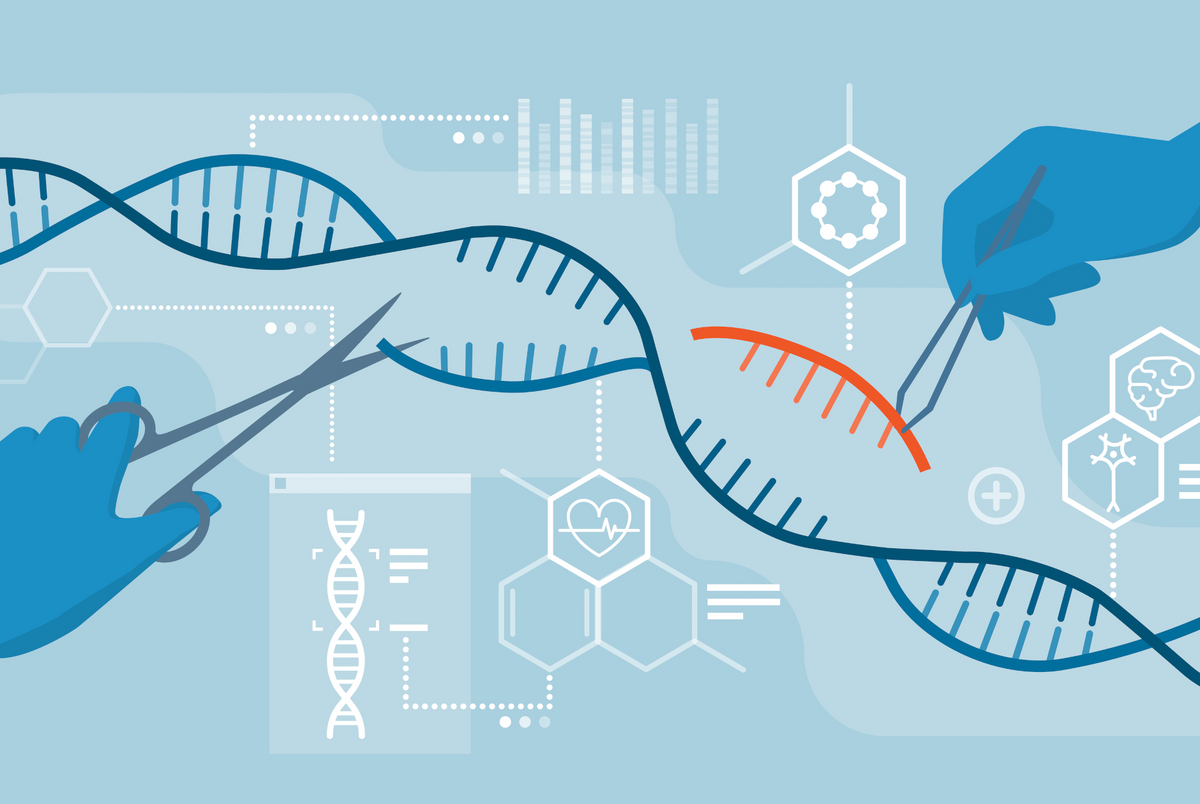
The premier gene editing technology, CRISPR-Cas9, was invented in 2009 by Jennifer A. Doudna and Emmanuelle Charpentier. CRISPR stands for Clustered Regularly Interspaced Short Palindromic Repeats. This technology works by recruiting a Cas9 protein to act as scissors to cut out portions of DNA that are known to generate genetic diseases or disorders. The cut-out sequences are then discarded, and the DNA strand is effectively glued back together using DNA ligase.
As you can imagine, this process has a high potential for failure. The human body contains over 3 billion base pairs in its DNA sequence, and a mutation can be anywhere in that sequence. The full extent to how CRISPR operates and impacts the surrounding, healthy base pairs is currently unknown.
Ethical Dilemma
A prevailing argument against the full implementation of CRISPR is that it will greatly reduce the diversity of a population. Sandy Sufian and Rosemarie Garland-Thomson argue in “The Dark Side of CRISPR” that CRISPR should be used to treat genetic differences rather than eliminate them. They further argue that the differences in the human population will decrease if CRISPR is used on a wider scale to change the traits of human embryos.
Additionally, informed consent is another point of contention. An embryo and all its future generations cannot consent to changes in their individual genome, and there is large pushback against altering the genes of those who cannot provide explicit consent. The National Human Genome Research Institute points out that parents are already making decisions on behalf of their future children, most similarly through IVF treatments.
Lastly, eugenics is a real fear. If genes can be edited then there is real potential for doctors, parents, and governments to select only the traits that they find desirable. All of this would be done in the name of “improving” the human race, but gene editing for this purpose is incredibly subjective and dangerous.
AI Integration
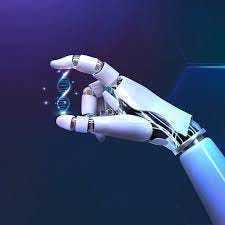
Despite all of these ethical dilemmas, genomics research is further integrating with AI.
CRISPR is becoming more advanced, but it can still fail to correctly cut out the mutated base pairs and can cause additional, unintended damage to the surrounding, healthy base pairs. Scientists at the University of Zurich are working on a new CRISPR method that targets a single strand of DNA instead of both. This targeted approach is expected to lead to less unintended consequences, and AI is being used to predict the efficacy of these new single-strand interventions. Gerald Schwank and Michael Krauthammer created a new AI-based algorithm that can recognize patterns in the pegRNA before it is cut. This pattern recognition allows the geneticists to determine the potential rate of success for their interventional method prior to the action being taken.
Another example of AI being used in gene editing comes from researchers at NYU Grossman School of Medicine. Researchers are employing AI to determine the rates of success for intervention using the protein structures called zinc-fingers. These structures are responsible for recruiting the correct enzymes to the DNA which will then cut out the targeted, mutated DNA sequence. However, how artificial zinc fingers interact with all DNA combinations is still unknown. This is where AI has become useful. These researchers have created ZFDesign which models and screens all the potential zinc finger and DNA interactions. This new tech-driven method has the potential to speed up the process of gene editing exponentially.
AI is responsible for helping geneticists and medical professionals determine the best course of action to take when treating problems contained within the human genome. Additionally, AI helps to predict the success of all the potential methods of intervention which prevents unnecessary intervention if the rate of success is proved to be negligible.
Overall, AI is making gene editing much safer. As scientists continue to research the impact of technologies like CRISPR and zinc-fingers then AI will become smarter as more data is input into it. However, despite the increasing safety of gene editing, there will always be ethical dilemmas that exist and will need to be thoroughly considered before implementing this technology on a wider scale.