
February 10, 2023
Flight Path of the Super App
Garrett Burnett

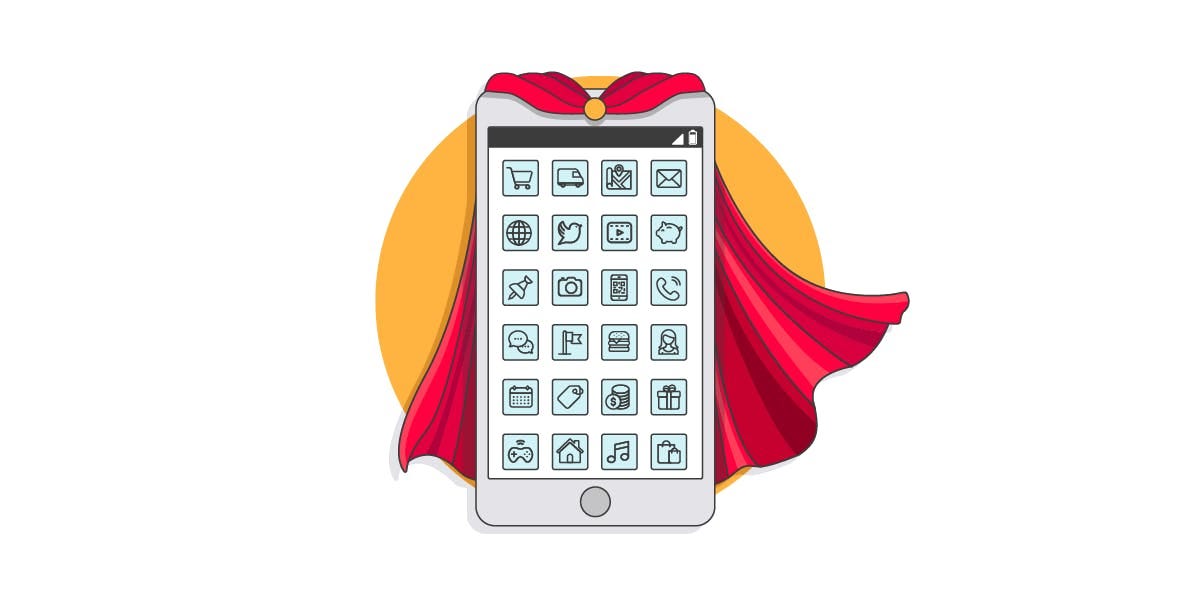
The Western World is on the brink of a Super App takeover. A Super App is a platform app that allows third-party operators to develop “mini-programs” that are hosted by the app. These “mini-programs” perform a wide variety of functions including, but not limited to, calling a ride, messaging friends, transferring money, playing games, paying bills and are all accessible through a single app on your phone. The most recognizable global Super Apps are WeChat (China), AliPay (China), Paytm (India), Grab (Singapore), Gojek (Indonesia), and Kakao (South Korea), and, although these platforms are estimated to host over 2.5 billion monthly users collectively, the Western population is a largely untapped market within these apps.
Asia’s Path to the Super App
The Eastern World experienced an entirely different start to its relationship with the Internet than its Western counterpart. While most of the Western world was gawking over the newest computer models and Internet trends in the 1990s, the Eastern World’s most populous country, China, was kept in the dark. The Chinese Communist Party severely limited Internet access for the Chinese citizenry, thus causing a lag in the adoption of the Internet and its global connectivity. Even once the citizens were finally able to access the Internet, the CCP restricted and filtered the contents that were accessible to the citizens. The restrictions prevented the major big-tech companies based in the United States from successfully capitalizing on the large base of potential users. This gap was filled by the China-based software companies, but that did not come until several years later.
According to the Retail Solutions Providers Association (RSPA), China was on the leading edge of Super Apps due to this lapse in widespread, unfiltered connectivity to the Internet. Early applications were designed for the computer in the majority of the world, but this was not the case in China where citizens did not have relatively easy and reliable access to a computer. This continued to be a trend, and, as of 2022, over 90% of the Chinese citizenry access the Internet via a mobile phone rather than a computer (RSPA). With this unique relationship with the Internet and applications, Internet users in China were more ready to utilize a Super App as they did not have extensive experience using various computer applications to complete their daily tasks. Additionally, the major developers of Super Apps were readily supported by the CCP who needed a better way to roll out public service apps as they did not have the infrastructure to properly communicate with the citizenry prior to the development of the Super App. The consolidation of multiple applications into a single Super App has proven to be wildly successful in China and other nearby countries.
Where is the Super App of the West?
Let me tell you: they have tried, and they are actively trying.
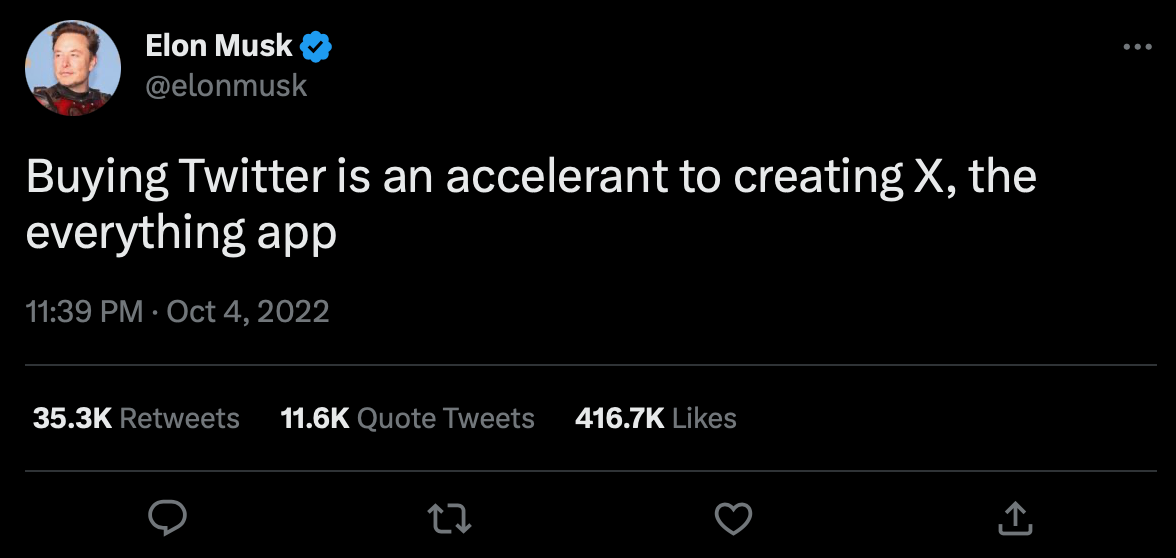
Technology companies like Google, Meta, and Twitter are driven by a single underlying force: profit. Every time you utilize one of their apps, services, or websites, pieces of your life and the very fabric of your identity are stored on their servers to be sold to advertisers across the globe. These advertisers then use this information to target you with products and services that you are most likely to find appealing with the hopes of turning your intrigue into a purchase.
These companies may be pumping out products that are free to use, but do not be mistaken – you and your data are the commodity. In 2021, 88% of Google’s, 97% of Meta’s, and 89% of Twitter’s total revenue came from advertising services. In the United States, there is increasing pressure for the federal government to limit the power of these technology giants in hopes of helping the average user reclaim and maintain their privacy while continuing to use these services.
The major issue with the increasing regulation of these companies, not only in the United States, is the crackdown on third-party cookies. Third-party cookies are cookies that are used to track and store users’ movements and preferences between different websites. These cookies are then transferred to advertisers who use them to market to target audiences more effectively. In addition to cookies, many users are now prompted with the option to opt-out of the sale of their personal data on many platforms.
With the mounting pressure of stricter regulations, companies are seeking alternative methods to capturing and maintaining high revenue streams. This is where the Super App comes into the picture. If Google, Meta, or Twitter (among others) are able to create a Super App that is widely used then data protection will be less of a concern. Users will be spending hours of their day on a single app that consolidates pages of apps that they already have on their phones into a single platform. Data collection becomes much easier if users are spending hours of their time on a single app that enables them to perform searches, pay bills, call a car, chat with their friends, send money, and numerous other functions.
The race to the Super App of the West has started, and it will continue to heat up as regulatory bodies loom menacingly overhead and users seek the ultimate levels of convenience.
However, there are additional hurdles to overcome in the race which include lack of homogeneity in the potential userbase and a general lack of trust in the major tech companies (Why isn’t there a super-app in the West yet in 2023?). This lack of homogeneity stems from the increased amount of time that the Western world has had to develop their preferences for individual applications, and the lack of consumer trust is based on the less than satisfactory track record of the largest tech companies in the world.
Although there are numerous hurdles to the release and wide-spread adoption of a Super App in the Western World, it does seem inevitable. The convenience of staying in a single app may prove powerful enough to subdue users’ concerns about data privacy and the continued growth and consolidation of big-tech.
Upon the arrival of the Super App, we may not be able to leap over buildings like Superman or move at superhuman speeds like the Flash, but we will be able to pay a bill, track a delivery, and play a game on our way to a dinner that we booked hours before in a car that we just hailed all through a single app.