
February 17, 2023
Fear of AI is Not Generationally Exclusive
Garrett Burnett
The Dee (Digital Emotional Experience) Movie, BMW’s official introduction to the BMW i Vision Dee at the 2023 International Consumer Electronics Show, tries its very best to dispel the fears of people wary of the future of AI integration into everyday life. Arnold Schwarzenegger, actor and former Governor of California, headlines the introduction video and plays a weary actor overwhelmed by the new AI attempting to convince him to embrace the advanced features of the newly revealed car.
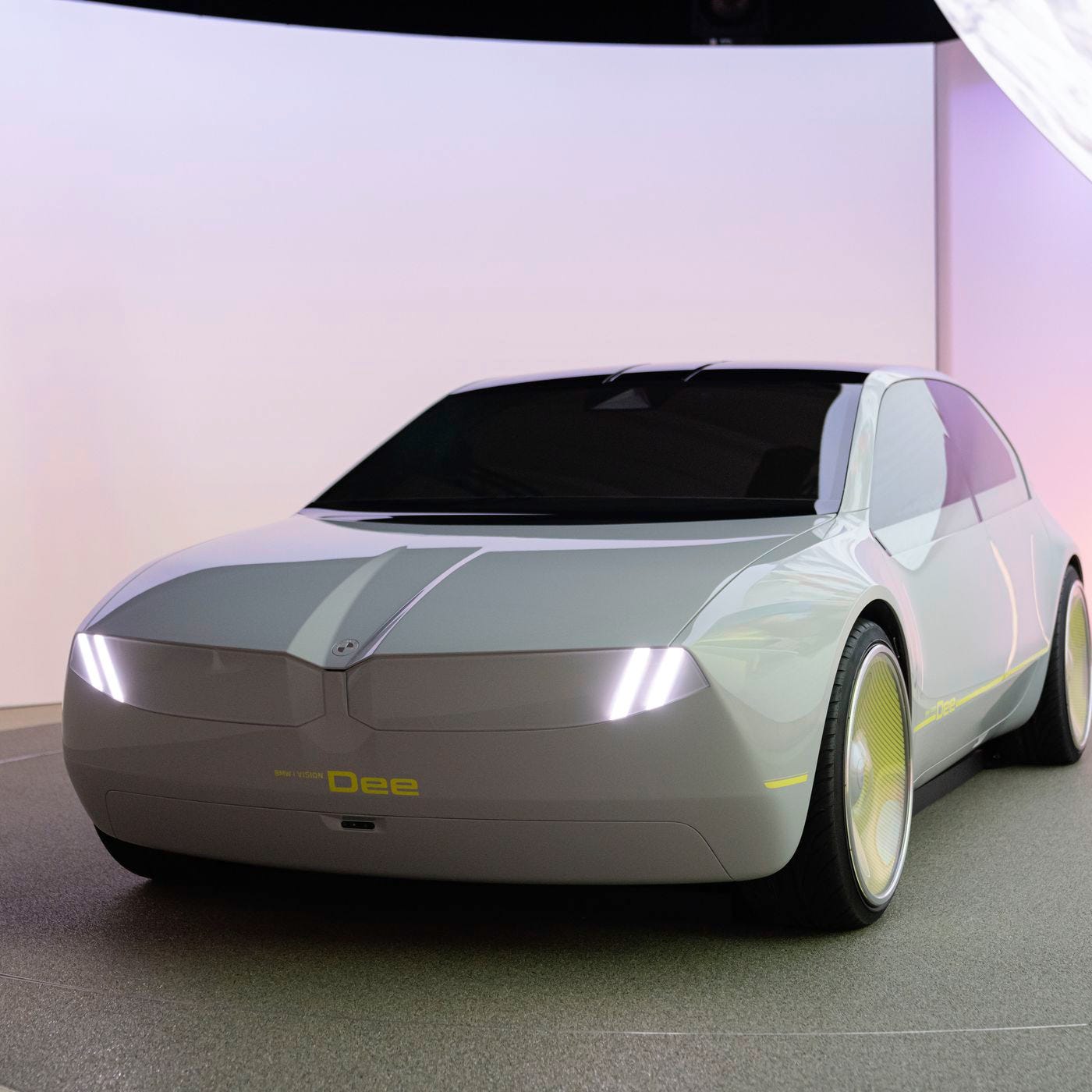
Schwarzenegger works against Dee by juxtaposing the frightening future with a 1980s story of high school romance guided by a classic, cherry red BMW. In opposition, Dee offers up a “digital soul” in the new color-changing i Vision Dee car. It is a “soul” that continually learns and adapts to your behaviors and provides features such as a full-sized heads-up display that can integrate your driving experience into a fully virtual world, a projection of your reactive avatar appearing in the driver’s window upon your approach, and a car grille that displays the facial expressions and emotions of the AI.
The reception was less than welcoming.
The most liked comment on BMW’s introduction video for the BMW I Vision Dee is “What a great video, thank you for reminding us how terrible for future will be.” This comment is not unique in its sentiment. It is surrounded by other commenters calling the technology “dystopian” and “cold.”
“I’m generation X and I feel like I just watched a new episode trailer of Black Mirror…”
Although this commenter expressed a fear backed by their generation, the fear of AI is not exclusive to single generation.
I could never imagine my grandmother, a member of the Silent Generation, embracing a world dominated by AI technology. She has successfully avoided technological advancements for decades. She most recently called me to discuss how to use the copy and paste feature to open a link she received in an email.
My parents, Baby Boomers, would be hesitant but willing to adapt with some assistance. They are up to date with modern mass-market technology, but they like the things that they already know how to work.
Although, my grandmother is not representative of all of the Silent Generation nor do my parents represent the entirety of the Baby Boomers. I know plenty of tech savvy members of both generations. The hesitation to these technological advancements comes not from age, but an unwillingness to adapt unless forced.
Familiarity is comfortable.
And I, a member of Gen Z, am hesitantly excited. I think that I have found comfort in the technology that I know, technology that I can teach my parents and grandmother to use if necessary. With anything new, there is a learning curve. AI is supposed to reduce this learning curve, as it learns alongside you to better adapt to your needs, but how much do I want a computer knowing about me? However, is that even a fair question nowadays? My life is integrated in the technology surrounding me. I wear a watch that tracks my steps, breaths, and hours of sleep, I nearly exclusively shop online, and I am susceptible to clicking on a targeted Instagram advertisement and being enticed to purchase something. Enough data has been collected about my habits and preferences to allow businesses to achieve success in acquiring me as a customer.
With all that being said, I am most definitely not alone. My generation, and each subsequent generation, is far more prepared to embrace the further integration of AI into our daily lives. AI will be integrated into every car, home, and office. It will become so ingrained into society that it will be challenging to think of a time before it.
AI is a rapidly developing field, and it will continue to develop long after we are all gone. AI integration is an inevitable phenomenon, and we can either embrace and adapt to the change or be woefully left behind.