
February 24, 2023
Creating Feelings of Synesthesia
Garrett Burnett


Digital scent technology seems like a necessary component of a quality, truly immersive experience. Imagine testing out the latest fragrances from the comfort of your home or smelling exactly what you see on your television screen. This added dimension of perception can enable consumers to link new memories to smells that they experience in addition to aiding them in their buying experience.
Smelling Colors
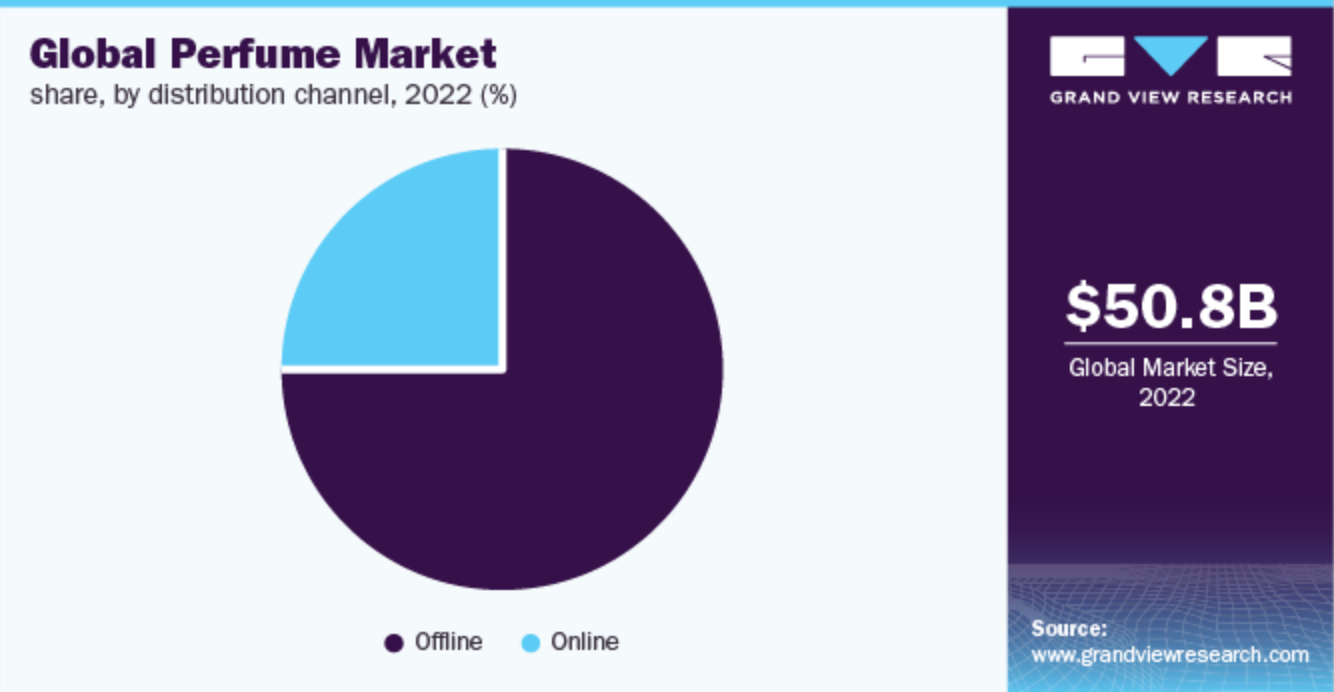
According to a market analysis report by Grand View Research, nearly 25% of the 2022 global perfume market was attributed to online purchases. Although a lot of these online purchases can be attributed to specialty purchases and repeat buyers, Grand View Research predicts that an increasing number of consumers will not travel to a store to smell and test fragrances. With the increase in online consumerism, perfume retailers are being challenged to adapt to selling scents without the consumer ever actually smelling what they are buying. This seems like it would be an impossible task, but, when faced with seemingly impossible tasks, technological innovation thrives.
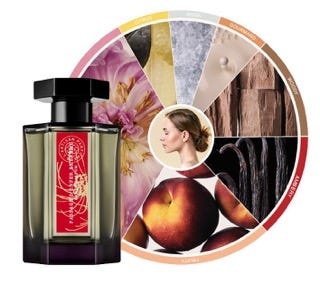
Givaudan, the largest fragrance company in the world, is uniquely poised to capitalize on this rise in online consumerism. In April of 2021, Givaudan confirmed its acquisition of Myrissi, a company responsible for developing AI technology that translates fragrances into distinct color patterns and images. Nearly two years later, in January of 2023, Givaudan announced that Myrissi’s technology would be integrated into the upcoming 2025 sales strategy. In the accompanying release video, Givaudan encourages customers to “feel colours” and “smell emotions.” This quasi-synesthesia is expected to increase online sales as customers will be driven to purchase scents based on unique color profiles and paired images rather than experiencing them in-person at a perfume counter or shop.

Educating New Consumers
Meanwhile, Tmall (e-commerce platform) and Puig (fragrance company) are working to decode the fragrance notes listed alongside product displays. When browsing fragrances online, you can expect to see top, heart, and base notes. It feels like it takes an expert to explain what each of the notes means, and I know that I find it impossible to combine all of these smells in my mind from memory. To solve this problem, Tmall and Puig have launched the “Scent Visualizer” to combat this confusion. It works as a decoder for all of fragrance notes by providing corresponding ingredient pictures of each note. According to a Fashion Network article by Triana Alonso, this is especially important for the Chinese market who make up a very small portion of the total fragrance industry despite the large population. The Chinese market is rather uneducated in the fragrance world, and the “Scent Visualizer” is expected to help consumers understand fragrance notes when making purchases online. The ability to capitalize on this market is essential for the estimated rapid growth of the global fragrance market over the next five years.
Wearable Technology
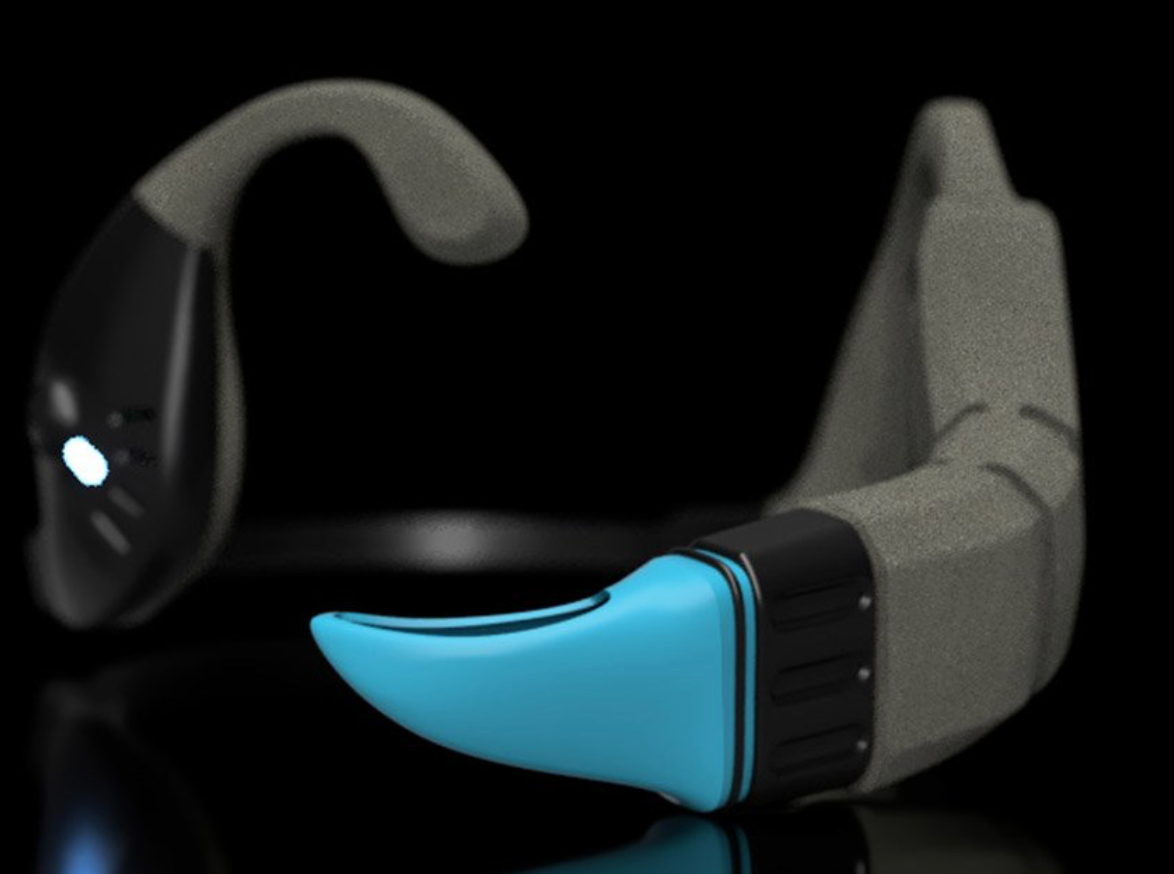
Arguably the most interesting component of digital scent technology is the new, more advanced wearable technology. OVR Technology recently unveiled a new piece of wearable scent technology called ION3. This device will have the ability to connect to all your devices via Bluetooth and has the ability to disperse thousands of unique scents from a single, universal cartridge. Additionally, users can develop their own scents in the mobile scent studio that can then be shared with other users.
As the Metaverse continues to grow, new technologies are making virtual worlds increasingly more immersive and realistic. From the consumer experience to video games and other forms of entertainment, smell technology is bringing a new dimension to the multitude of virtual experiences.